There is no single best neighborhood in San Francisco. There is only the best neighborhood for the way you actually live — how you commute, whether you need a yard, how much fog you can tolerate, and what you're willing to pay per square foot to avoid a hill.
That last point matters more than most buyers expect. San Francisco is roughly seven miles by seven miles, and within that footprint the median sale price swings from about $1.2 million in Nob Hill to nearly $5 million in Presidio Heights. Sunshine varies just as sharply: Potrero Hill sees blue sky on mornings when Golden Gate Heights is buried in marine layer. Two neighborhoods twenty minutes apart can feel like different cities.
The citywide picture as of this writing: the median home price sits near $1.7 million, with single-family homes averaging $2.0 to $2.15 million after a roughly 18% year-over-year climb driven by renewed AI-sector hiring. Condos remain the softer half of the market at $1.2 to $1.4 million. Inventory is thin — around 1,800 total sales per quarter — and more than 70% of homes sell above list. Single-family homes are moving in 16 to 20 days. Condos take 34 to 42.
What that means practically: a mid-tier purchase in the $1.5 to $1.7 million range requires roughly $320,000 to $370,000 in household income with 10–20% down. A starter condo around $950,000 requires closer to $175,000 to $215,000. Those are the real numbers, and they should shape which of the neighborhoods below you spend your weekends walking.
Here's how the thirteen compare.
San Francisco Neighborhood Comparison
Neighborhood | Median Price | Price/Sq Ft | Walk Score | Character | Best For |
|---|---|---|---|---|---|
Nob Hill | $1.2M–$1.25M | $1,180–$1,300 | 99 | Formal, historic, vertical | Condo buyers, downtown commuters |
Russian Hill | $1.5M–$1.7M | $1,300–$1,350 | 98 | Scenic, residential, hidden | View buyers, professionals |
Pacific Heights | $1.8M–$2.4M | $1,200–$1,450 | 97 | Grand, established | Luxury buyers across price tiers |
Presidio Heights | $4.5M–$5.5M | $1,400–$2,280 | 90 | Quiet, park-adjacent | Families at the top of the market |
Noe Valley | $2.2M–$2.5M | $1,250–$1,350 | 96 | Sunny, family-centered | Families wanting flat streets |
Alamo Square | $1.6M–$2.0M | $940–$1,150 | 90 | Historic, creative | Victorian buyers, value seekers |
NoPa | $1.5M–$1.8M | $1,050–$1,220 | 97 | Food-driven, walkable | Young professionals, first-timers |
Golden Gate Heights | $1.9M–$2.2M | $1,100–$1,250 | 61 | Panoramic, quiet | View buyers who drive |
Lower Pacific Heights | $1.3M–$1.5M | $1,050–$1,200 | 98 | Central, unpretentious | Best value near prime addresses |
Dolores Heights | $2.5M–$3.2M | $1,350–$1,600 | 96 | Elevated, architectural | Design-focused buyers |
Cole Valley | $1.8M–$2.1M | $1,250–$1,400 | 94 | Village-like, green | Families, UCSF-affiliated buyers |
Inner Richmond | $1.7M–$2.1M | $980–$1,150 | 96 | Diverse, food-rich | Value buyers wanting square footage |
Potrero Hill | $1.6M–$1.9M | $1,100–$1,280 | 88 | Sunny, industrial-modern | Peninsula commuters, loft buyers |
How to Choose: Start With How You Live
If you have school-age children, the shortlist narrows quickly to Noe Valley, Cole Valley, Presidio Heights, and Inner Richmond. Each has a genuinely strong assigned elementary school, flat or manageable walking terrain, and a commercial strip you can reach with a stroller. Noe Valley and Inner Richmond deliver this at meaningfully lower cost than Presidio Heights.
If this is your first purchase, you are almost certainly buying a condo or a flat, and the neighborhoods where that inventory is deepest and best-priced are Nob Hill, Lower Pacific Heights, NoPa, and Inner Richmond. Nob Hill in particular has entry-level studios and one-bedrooms starting around $700,000 to $850,000 — the lowest true entry point on this list in a genuinely prime location.
If you work from home, prioritize light and sun over transit. Potrero Hill, Noe Valley, and Dolores Heights sit on the warm side of the city's central ridge. Golden Gate Heights will give you the best views on the list, but you should visit in July before you commit.
If you're downsizing, Russian Hill and Pacific Heights offer full-floor flats and view condos with elevator access and services — the format that works when a four-story Victorian no longer does.
If you commute to the Peninsula, Potrero Hill is the clear answer. The 22nd Street Caltrain station sits on the eastern slope, and 101 and 280 are both at the neighborhood's edge.
The Thirteen Neighborhoods
Nob Hill: The City's Most Walkable Address
Nob Hill remains the most formal neighborhood in San Francisco and, counterintuitively, one of the most accessible. The median price of $1.2 to $1.25 million sits below the citywide median, because the housing stock is predominantly condos and co-ops rather than houses. Entry-level studios and one-bedrooms start around $700,000 to $850,000, while full-service view units and luxury co-ops run $2.5 to $4.5 million and beyond. Price per square foot averages $1,180 to $1,300, with full-service towers commanding a premium over boutique low-rise buildings.
The architecture is the city's most varied: French Renaissance and Beaux-Arts in the grand hotels and pre-war towers, Gothic Revival at Grace Cathedral, Art Deco in the 1920s and '30s co-ops, and classic Edwardian and Victorian flats along the residential side streets.
The Walk Score is 99 — the highest on this list. Acquerello holds two Michelin stars, Sons & Daughters holds one, Swan Oyster Depot has been serving a cash-only counter on Polk since long before anyone called it a landmark, and the Tonga Room still stages an indoor rainstorm every twenty minutes. Transit is unmatched: the California cable car runs directly through the neighborhood, the Powell lines run north-south, and the 1-California, 27-Bryant, 12-Folsom/Pacific, and 49-Van Ness cover everything else.
The honest trade-off: the hills are genuinely steep, and the 99 Walk Score assumes you don't mind them. Street parking is difficult and expensive to buy your way out of. The neighborhood also skews toward denser buildings — if you want a yard, look elsewhere.
Russian Hill: The Highest Price Per Square Foot in the City
Just north of Nob Hill, Russian Hill trades formality for something quieter and more residential. Median prices run $1.5 to $1.7 million across property types, with one-bedroom condos starting around $850,000 to $1.1 million and full-floor flats and view penthouses regularly clearing $2.5 to $5 million. At $1,300 to $1,350 per square foot, Russian Hill frequently posts the highest price per square foot in San Francisco — a direct function of unobstructed Bay and Golden Gate Bridge sightlines.
The architecture rewards walking. Shingle-style and First Bay Tradition homes tuck into hidden lanes like Macondray, several designed by Willis Polk and Julia Morgan. Pre-1906 Italianate and Victorian flats line the main corridors, and the Feusier Octagon House survives as one of the city's genuine architectural oddities.
Gary Danko remains a Michelin-starred institution; Seven Hills and Frascati anchor the neighborhood's everyday dining; Swensen's has been scooping at Hyde and Union since 1948. The Powell-Hyde and Powell-Mason cable cars both serve the neighborhood, alongside the 19-Polk, 45-Union/Stockton, 49-Van Ness, and 12-Folsom/Pacific.
The honest trade-off: Russian Hill has the fourth-highest property crime rate in the city at 43 incidents per 1,000 residents — a direct consequence of tourist foot traffic around Lombard Street. Violent crime is not the issue; car break-ins are. Buyers should think hard about garage parking.
Pacific Heights: The Full Range of Luxury
Pacific Heights is the neighborhood most people picture when they picture wealthy San Francisco, but its median of $1.8 to $2.4 million understates how wide the range actually runs. Condos and one-bedroom flats start near $900,000 to $1.2 million. Mansions on the Broadway blocks known as Billionaire's Row sell for $10 million to $35 million and above — the neighborhood holds the citywide record above $70 million. Price per square foot averages $1,200 to $1,450.
Queen Anne Victorians with turrets and elaborate millwork sit alongside Châteauesque and French Provincial masonry estates on Broadway and Washington, plus Colonial and Tudor Revival mansions and Willis Polk-designed multi-unit buildings.
SPQR carries a Michelin star on Fillmore. State Bird Provisions and The Progress sit at the neighborhood's lower border. Pizzeria Delfina and Sweet Maple handle the everyday. Lafayette Park and Alta Plaza Park both deliver panoramic views. Transit runs on the 1-California, 22-Fillmore, 24-Divisadero, and 3-Jackson, with the California cable car terminating at Van Ness.
The honest trade-off: the price range is so wide that "living in Pacific Heights" means very different things at $1 million and $10 million. A studio near Van Ness and a Gold Coast ridge mansion share a name and almost nothing else. Be specific about which blocks you're targeting.
Presidio Heights: The Quietest Money in San Francisco
At a median of $4.5 to $5.5 million, Presidio Heights is the most expensive neighborhood on this list — not because individual homes outprice Pacific Heights at the ceiling, but because the housing stock is almost entirely large detached single-family homes. Luxury homes and historic mansions run $6 million to $15 million and up. The relatively few condos and boutique flats along Sacramento and California sit at $1.4 to $2.2 million. Price per square foot spans $1,400 to $2,280 depending on renovation level and lot size.
Tudor and Elizabethan Revival dominate, joined by Colonial and Georgian Revival brick facades and shingle-style homes by Julia Morgan and Bernard Maybeck. Spruce holds a Michelin star; Garibaldis and Sociale anchor the Sacramento Street strip; B. Patisserie sits just south on California.
Schools are a genuine draw. Claire Lilienthal Elementary's Madison campus rates 8–9 on GreatSchools, Roosevelt Middle rates 8, and San Francisco Day School, The Town School for Boys, University High School, and Drew School are all within easy reach. The 1-California, 2-Clement, 38/38R-Geary, and 43-Masonic serve the neighborhood, plus the free Presidio GO shuttle.
The honest trade-off: inventory is extremely thin. In a typical year only a handful of homes trade. If you want to buy here, you should expect to wait for the right property rather than choose from a selection.
Noe Valley: Sun, Flat Streets, and Families
Noe Valley earns its reputation. The median of $2.2 to $2.5 million reflects a market where single-family homes average $2.7 to $3.2 million and renovated two-bedroom flats and condos run $1.3 to $1.8 million. At $1,250 to $1,350 per square foot, the premium goes to homes with level backyards, parking, and expanded footprints.
The housing stock is classic Victorian and Italianate with Edwardian flats throughout, plus a well-established local genre of glass-and-steel rear additions built behind preserved period facades. The 96 Walk Score is unusually meaningful here because 24th Street and Church Street are genuinely flat — a rarity in this city and the single biggest reason families choose Noe Valley over comparable neighborhoods.
Contigo serves Spanish tapas in a garden setting, Saru Sushi handles omakase, Firefly has been doing seasonal American comfort food for decades, and Noe Valley Bakery is a neighborhood institution. Alvarado Elementary rates 8 on GreatSchools with a well-regarded Spanish dual immersion program. The J-Church runs straight down Church Street to Market, supported by the 24-Divisadero, 48-Quintara/24th Street, and 35-Eureka. Violent crime here is among the lowest in the city.
The honest trade-off: you are paying a real premium for the sun and the flat streets, and inventory turns over slowly because people don't leave. Expect competition on anything move-in ready.
Alamo Square: The Best Victorian Value on This List
Alamo Square offers the lowest price per square foot of any neighborhood on this list outside Inner Richmond — $940 to $1,150 — while delivering some of the city's most significant architecture. The median runs $1.6 to $2.0 million, with condos from $800,000 to $1.3 million and restored multi-story Victorians reaching $2.5 to $5 million.
Postcard Row on Steiner Street is the famous stretch, but the Queen Anne, Italianate, and Stick/Eastlake inventory extends well beyond it, joined by post-1906 Edwardian flats with cleaner lines and masonry bases. Che Fico and Souvla handle the Divisadero corridor, Ragazza does Neapolitan pizza, and Eddie's Cafe has been serving breakfast for generations. Alamo Square Park itself offers wide lawns, tennis courts, and a dog-friendly area.
Transit is strong in all four directions: the 5/5R-Fulton to Civic Center, the 21-Hayes through Hayes Valley, and the 22-Fillmore and 24-Divisadero running north-south.
The honest trade-off: the tourist traffic at Postcard Row is constant, and the blocks facing the park absorb it. Buyers who want quiet should look at the interior streets. Restoration costs on unrenovated Victorians here are substantial — budget accordingly.
NoPa: The City's Best Food Corridor
North of the Panhandle runs from Fell Street up to Turk, bounded by Divisadero on the east and Masonic on the west. The median of $1.5 to $1.8 million covers renovated one- and two-bedroom condos and flats at $950,000 to $1.5 million and grand Victorians and full-building Edwardian duplexes at $2.5 to $3.8 million. Price per square foot averages $1,050 to $1,220.
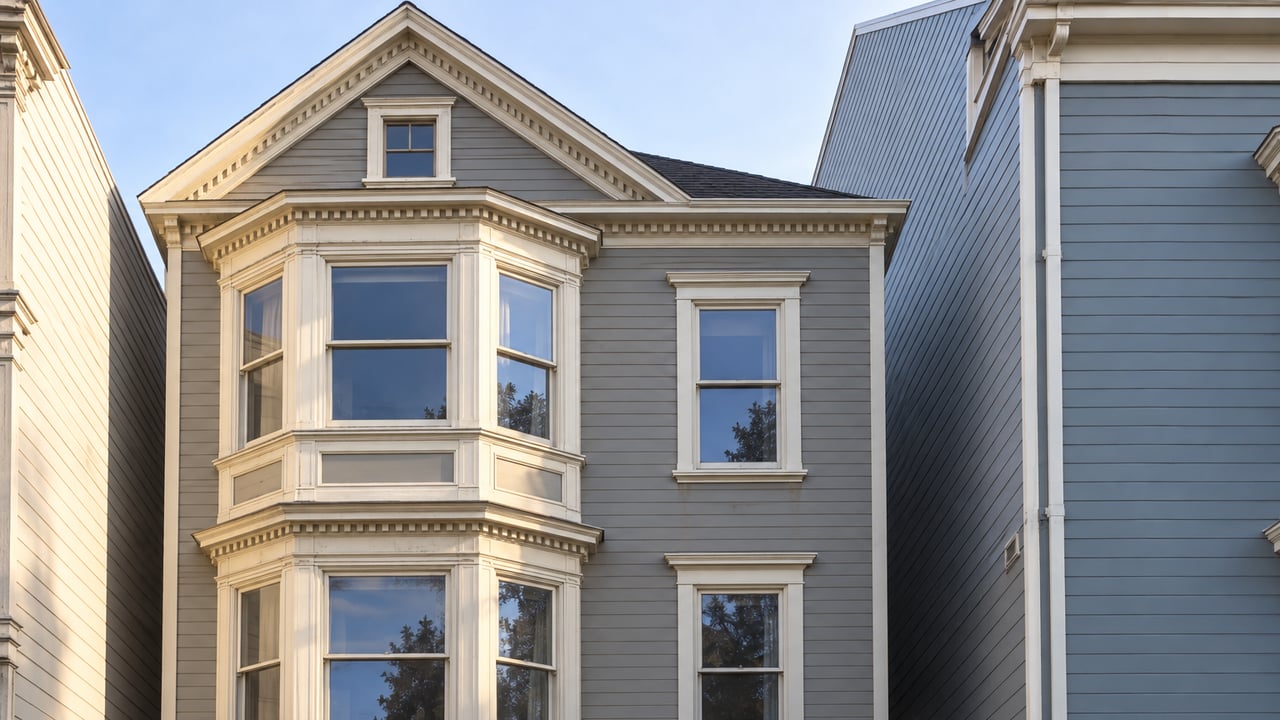
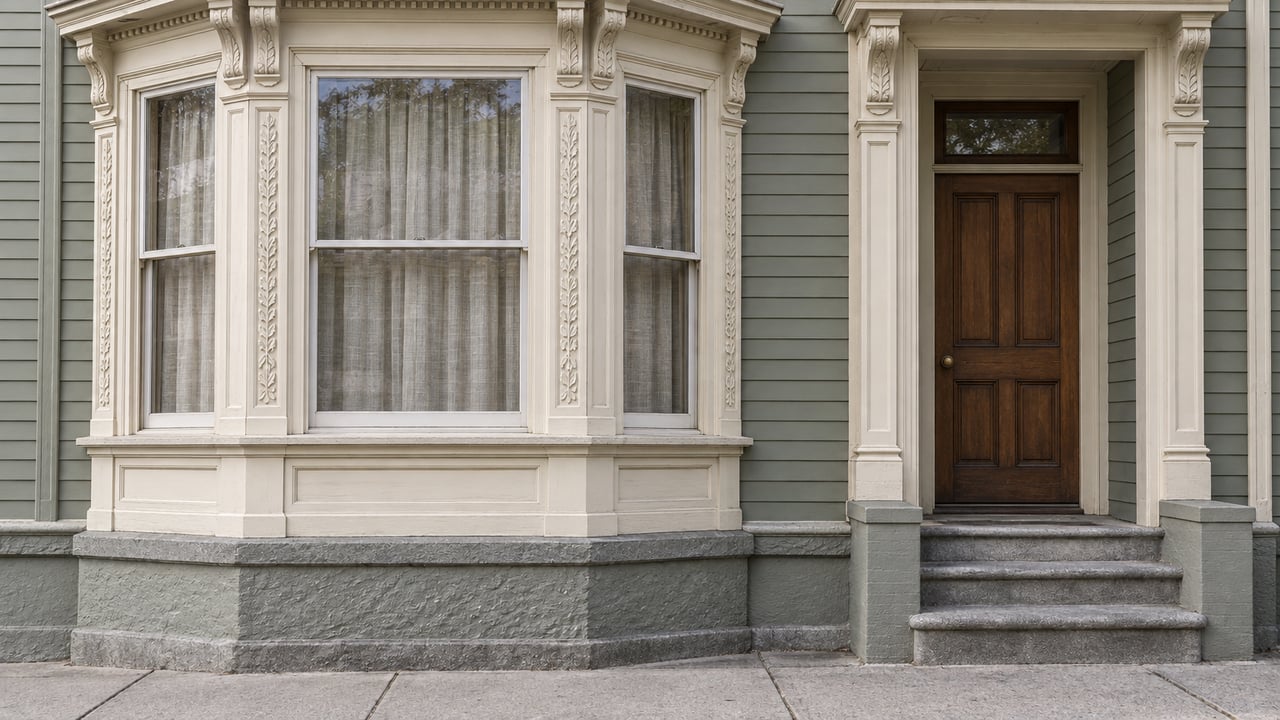
The housing is predominantly Edwardian flats and duplexes with bay windows and classical entry columns, plus Queen Anne and Italianate Victorians and a scattering of boutique conversion buildings.
The Divisadero corridor is the draw. Nopa the restaurant anchors it with wood-fired California cooking served late; The Mill pairs Four Barrel coffee with Josey Baker bread; Bi-Rite Market covers everyday groceries at a level most neighborhoods don't have; Brenda's Meat & Three handles Southern comfort food. The 97 Walk Score is fully earned. Transit runs on the 5/5R-Fulton, 21-Hayes, 24-Divisadero, 43-Masonic, and the 7-Haight/Noriega a block south.
The honest trade-off: parking is the neighborhood's real weakness — the Divisadero restaurant traffic competes directly with residents for street spaces every evening. A deeded space changes the experience materially and is worth paying for.
Golden Gate Heights: The View Play
Golden Gate Heights sits above the Inner Sunset between roughly Kirkham and Taraval, 12th and 19th Avenues, at elevations exceeding 600 feet at Grandview Park. The median of $1.9 to $2.2 million buys almost exclusively single-family homes: entry-level detached properties from $1.6 to $1.8 million, fully modernized view homes from $2.5 to $3.8 million and up. Price per square foot runs $1,100 to $1,250, with a significant premium on the view spine.
The architecture is distinctive — 1920s and '30s Spanish Eclectic and Mediterranean Revival with stucco and red tile roofs, plus custom mid-century modern hillside builds along 14th and 15th Avenues designed entirely around panoramic windows.
Dining is down the hill: San Tung on Irving for dry-fried chicken wings, Fiorella on 9th, Devil's Teeth on Noriega. The 6-Haight/Parnassus and 66-Quintara serve the hill directly, with the N-Judah and L-Taraval accessible below.
The honest trade-off: the Walk Score is 61, the lowest here by a wide margin, and the fog is real. From June through August the neighborhood gets blanketed in dense marine layer and wind well before eastern neighborhoods do. The eastern slope catches morning sun as the layer burns off; the western slope stays cool and gray. Visit in summer, not spring, and visit at 7 a.m.
Lower Pacific Heights: The Value Address
Lower Pacific Heights — roughly California or Bush down to Geary, Van Ness west to Presidio Avenue — is the most underrated buy on this list. The median of $1.3 to $1.5 million is nearly a million dollars below Pacific Heights proper, with condos and converted flats at $850,000 to $1.3 million and renovated single-family Victorians and Edwardians at $2.2 to $3.5 million. Price per square foot runs $1,050 to $1,200.
The 98 Walk Score is among the highest in the city, with Fillmore, Divisadero, and California all serving the neighborhood. State Bird Provisions and The Progress are here. So are Outta Sight Pizza, Jane on Fillmore, and Sweet Maple. Transit is exceptional: the 22-Fillmore, 38/38R-Geary, 1-California, 2-Clement, 3-Jackson, and 24-Divisadero.
The honest trade-off: the boundary with Pacific Heights proper is genuinely contested, and listings sometimes stretch it. Verify the cross streets rather than the listing description. The neighborhood also lacks the green space that Pacific Heights has in Lafayette and Alta Plaza.
Dolores Heights: Architecture and Elevation
Dolores Heights occupies the hillside between 18th and 22nd Streets, Dolores to Castro or Church. The median of $2.5 to $3.2 million reflects a market where custom hillside rebuilds command $3.5 to $8 million and renovated two-bedroom condos and flats run $1.4 to $2.2 million. At $1,350 to $1,600 per square foot, it is the second-most expensive on this list by that measure, with elevated south-facing parcels drawing the premium.
The neighborhood has become a showcase for contemporary residential architecture — glass-and-steel vertical additions engineered for steep lots and long views toward downtown, Dolores Park, and the East Bay hills. Restored Victorians line Liberty and Hill Streets, joined by Edwardian flats and Mission Revival stucco.
Delfina, Tartine, Bi-Rite Creamery, and Pizzeria Delfina are all within a short walk, as is Anchor Oyster Bar in the Castro. The J-Church runs past Dolores Park, Castro Station serves the K, L, M, and T lines, and the 33-Ashbury/18th, 24-Divisadero, and 48-Quintara cover the rest.
The honest trade-off: the hills here are steep enough to shape daily life. Some of the best view lots require a genuine climb from transit, and construction on steep parcels carries real cost and permitting complexity if you plan to renovate.
Cole Valley: The Village
Cole Valley is small — Frederick or Waller down to Tank Hill, Clayton east to Stanyan — and that scale is the entire appeal. The median of $1.8 to $2.1 million spans single-family homes at $2.8 to $4.5 million and one- and two-bedroom condos and Edwardian flats at $1.3 to $1.6 million. Price per square foot averages $1,250 to $1,400.
Edwardian multi-family flats dominate, with Queen Anne and Stick-style Victorians and shingle and craftsman bungalows along the hillside streets climbing toward Tank Hill and Mount Sutro. The commercial life is concentrated on two blocks of Carl and Cole: Zazie and its famous garden patio, Padrecito for upscale Mexican, Beit Rima for Levantine, and the Ice Cream Bar's 1930s soda fountain.
Grattan Elementary rates 8–9 on GreatSchools and sits in the middle of the neighborhood on Shrader. The N-Judah stops at Carl and Cole and runs straight downtown, supported by the 6-Haight/Parnassus, 43-Masonic, and 37-Corbett.
The honest trade-off: Cole Valley is tiny, which means inventory is scarce and the commercial strip, while excellent, is short. UCSF Parnassus is adjacent — a plus for medical professionals, a source of traffic for everyone else.
Inner Richmond: The Most Square Footage Per Dollar
At $980 to $1,150 per square foot, Inner Richmond is the best value on this list, and the median of $1.7 to $2.1 million buys meaningfully more house than the same money elsewhere. Single-family homes run $2.3 to $3.5 million; two-bedroom Edwardian flats and renovated condos average $1.1 to $1.5 million.
The neighborhood runs from Lake Street and the Presidio down to Fulton and Golden Gate Park, Arguello west to Park Presidio. Edwardian flats with prominent bay windows dominate, joined by 1920s and '30s barrel-front homes with ground-floor garages and craftsman bungalows near Mountain Lake Park.
Clement Street is one of the city's genuinely great food corridors — Burma Superstar for tea leaf salad, Good Mong Kok for dim sum, Arsicault for croissants that draw national attention, Pizzetta 211 for seasonal thin-crust. Peabody Elementary rates 9–10 on GreatSchools; Roosevelt Middle rates 8. Transit is strong on the 38/38R-Geary, 1-California, 2-Clement, 44-O'Shaughnessy, and 28/28R-19th Avenue.
The honest trade-off: fog. Inner Richmond sits west of the ridge and gets a good deal more of it than the eastern neighborhoods. The value is real, but so is the gray.
Potrero Hill: Sun and the Caltrain
Potrero Hill is consistently among the sunniest and warmest neighborhoods in San Francisco. Sitting east of the Twin Peaks and Sutro ridge, it is shielded from the marine layer that blankets the western half of the city. For buyers who have spent a summer in the fog belt, that alone justifies the look.
The median runs $1.6 to $1.9 million: single-family homes and converted view flats at $2.2 to $3.5 million, condos and lofts at $950,000 to $1.4 million, at $1,100 to $1,280 per square foot. North-facing properties with downtown skyline views command the premium.
The housing mix is unusual — repurposed warehouse lofts and contemporary infill alongside 19th-century Victorian cottages built for working families on steep hillside lots. Chez Maman does French bistro, Plow draws weekend lines for lemon-ricotta pancakes, and Farley's has functioned as the neighborhood's living room since 1989.
For commuters, this is the most practical neighborhood on the list: the 22nd Street Caltrain station sits on the eastern slope with express service down the Peninsula, and both 101 and 280 are at the border. Muni runs the 19-Polk, 22-Fillmore, 48-Quintara, and 55-Dogpatch.
The honest trade-off: the hills are steep, the freeways that make commuting easy also generate noise on the western edge, and the neighborhood's character shifts noticeably block to block as you move toward Bayview.
Presidio Heights vs. Pacific Heights
These two neighbors get compared constantly, and the comparison is usually framed wrong. The question isn't which is more expensive — it's what kind of property you want.
Presidio Heights | Pacific Heights | |
|---|---|---|
Overall median | $4.5M–$4.7M | $1.8M–$2.0M |
Single-family median | $6.5M–$8.9M | $3.8M–$6.7M |
Condo/co-op median | $1.8M–$2.2M | $1.4M–$1.8M |
Price per sq ft | $1,400–$2,280 | $1,200–$1,450 |
Record sale | $35M | $70M+ |
Walk Score | 90 | 97 |
Presidio Heights posts the higher median because it is a compact, low-density enclave composed almost entirely of detached single-family homes and grand multi-floor flats. Pacific Heights spans far more ground and far more density — $800,000 studios near Van Ness and $30 million-plus mansions on the Gold Coast ridge sit inside the same neighborhood name, and the condo volume pulls the median down.
The real distinction is what you're buying. Presidio Heights offers wider, deeper lots directly bordering the 1,500-acre Presidio, quiet streets, and private gardens — a suburban feel inside city limits. Pacific Heights offers immediate access to the Fillmore and Upper Polk retail corridors, steeper terrain, denser construction, and the city's best Bay and Golden Gate views. Pacific Heights holds the record for the highest sales; Presidio Heights holds the higher floor.
If you want a house with a yard and a park across the street, look at Presidio Heights. If you want to walk to dinner and have options across a wide price range, look at Pacific Heights.
Neighborhoods by Priority
- Most walkable: Nob Hill (99), Lower Pacific Heights (98), Russian Hill (98), NoPa (97), Pacific Heights (97).
- Best value per square foot: Alamo Square ($940–$1,150), Inner Richmond ($980–$1,150), Lower Pacific Heights ($1,050–$1,200), NoPa ($1,050–$1,220).
- Lowest violent crime: Noe Valley, Inner Richmond, and Golden Gate Heights rank among the city's lowest. San Francisco's violent crime is heavily concentrated in the downtown commercial core — the Tenderloin (22 per 1,000), SoMa (17), Financial District (16), and Mission (11). None of the residential neighborhoods on this list approach those figures.
- Property crime worth noting: Russian Hill (43 per 1,000) sits fourth citywide, driven by tourist foot traffic near Lombard. Garage parking meaningfully changes the experience.
- Sunniest: Potrero Hill, followed by Noe Valley and Dolores Heights — all east of the central ridge.
- Foggiest: Golden Gate Heights and Inner Richmond, both west of the ridge and directly exposed to the Pacific marine layer.
- Best for families: Noe Valley, Cole Valley, Presidio Heights, Inner Richmond — strong assigned schools, manageable terrain, low violent crime.
- Best views: Russian Hill, Golden Gate Heights, Dolores Heights, Potrero Hill.
- Most affluent: Presidio Heights, Pacific Heights, Dolores Heights.
- Quietest: Presidio Heights, Golden Gate Heights, Cole Valley.
- Lowest entry point: Nob Hill, where studios and one-bedrooms start around $700,000 to $850,000.
Frequently Asked Questions
Is Nob Hill a good neighborhood to live in? Yes, particularly for condo buyers and downtown commuters. It has the highest Walk Score in the city at 99, direct cable car and bus access, and the lowest entry point of any prime neighborhood — studios and one-bedrooms from roughly $700,000. The trade-offs are steep terrain, difficult street parking, and a housing stock with almost no single-family homes or yards.
What is the most affordable good neighborhood in San Francisco? By price per square foot, Alamo Square ($940–$1,150) and Inner Richmond ($980–$1,150) offer the most house per dollar. By absolute entry point, Nob Hill and Lower Pacific Heights have the lowest-priced condo inventory among prime neighborhoods.
Which San Francisco neighborhoods get the most sun? Potrero Hill is consistently ranked among the sunniest, along with the Mission and Dogpatch. All three sit east of the Twin Peaks and Sutro ridge, which blocks the Pacific marine layer. Noe Valley and Dolores Heights also benefit. Golden Gate Heights and the Richmond, both west of the ridge, get substantially more fog.
What's the difference between Pacific Heights and Lower Pacific Heights? Lower Pacific Heights sits south of California or Bush Street, extending to Geary. It shares the same walkability and much of the same architecture but carries a median roughly $500,000 to $900,000 lower — $1.3 to $1.5 million versus $1.8 to $2.4 million. It lacks Pacific Heights' major parks and its highest-end housing stock.
Where do families live in San Francisco? Noe Valley is the most established family neighborhood, with Alvarado Elementary rated 8 on GreatSchools and unusually flat streets. Cole Valley (Grattan Elementary, 8–9), Presidio Heights (Claire Lilienthal, 8–9, plus a cluster of private schools), and Inner Richmond (Peabody Elementary, 9–10) are the other strong options.
How much do I need to earn to buy a home in San Francisco? For a mid-tier home in the $1.5 to $1.7 million range, roughly $320,000 to $370,000 in household income with 10–20% down. For a starter condo near $950,000, roughly $175,000 to $215,000. These figures move with interest rates, so treat them as a starting point rather than a fixed threshold.
How competitive is the San Francisco market right now? More than 70% of homes sell above list. Single-family homes average 16 to 20 days on market; condos average 34 to 42. Single-family inventory is meaningfully tighter than condo inventory, which is where buyers currently have the most negotiating room.
Find the Right Neighborhood With Nob Hill Compass
Choosing a San Francisco neighborhood is a decision about daily life as much as about real estate — how far you'll walk for groceries, whether you'll see the sun in July, what your commute actually looks like on a Tuesday morning. Data narrows the list. Walking the blocks at different hours settles it.
The Nob Hill Compass team has closed transactions across these neighborhoods at every price tier, from entry-level condos to properties on Jackson Street, Green Street, and Lake Street in the eight-figure range. Victoria Stewart Davis and the team can help you compare neighborhoods against your budget, timeline, and priorities, and can share off-market inventory that never reaches the public listings.
If you're weighing two or three neighborhoods and want a straight assessment of the trade-offs, reach out.
Nob Hill Compass 1177 California Street, San Francisco, CA 415-226-9387 [email protected]