A San Francisco seller who closed a $25 million sale before November 2020 paid half of what the same sale costs in transfer tax today, according to a December 2025 analysis in the San Francisco Standard. Proposition I applies the higher rate to the entire sale price once a property crosses the threshold, not just the portion above it.
City Hall has spent most of 2026 debating whether to undo that increase. If you own a single-family home in Pacific Heights and you've seen headlines about a transfer tax cut moving through the Board of Supervisors, the detail that matters most for your net proceeds is the one most coverage buries: NAIOP San Francisco Bay Area's summary says the cut, as written, does not apply to your property type.
How Proposition I Changed the Math
Prop I passed in November 2020 with 57 percent of the vote, according to The Real Deal. It roughly doubled San Francisco's documentary transfer tax on sales of $10 million or more, taking the rate from about 2.75 percent to what is now reported as 5.75 percent on the $10 million to $24.99 million band, and from 3 percent to 6 percent at $25 million and above. The nonpartisan policy group SPUR projected the measure would raise an average of $196 million a year for the city's general fund. Between 2021 and 2024, it generated $324 million, according to the city's Housing Stability Fund Oversight Board as cited by the Standard.
The tax is customarily paid by the seller in a San Francisco residential transaction, a practice the city outlines on its own transfer tax page. That makes Prop I a direct line item against net proceeds, not an abstract policy debate.
Why Pacific Heights Sits Inside This Bracket, Not Below It
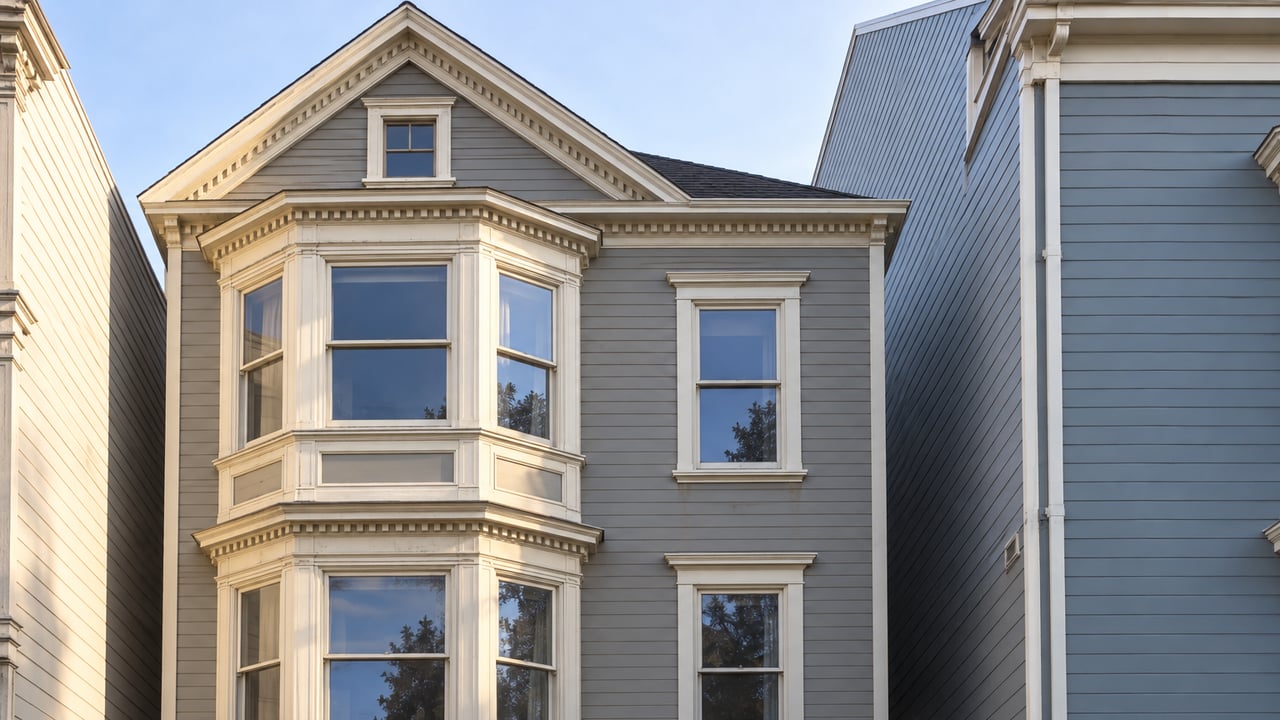
The $10 million threshold is not a hypothetical ceiling for this neighborhood. The San Francisco Association of Realtors' March 2026 report placed the single-family home median in Pacific Heights at $8.4 million, with homes averaging 51 days on market and roughly one month of supply. A median of $8.4 million means a meaningful share of sales close well above it, and well past the $10 million line where Prop I's higher rate applies.
Zoom out to the broader district and the trend sharpens. The San Francisco Chronicle reported that the median house price across Realtor District 7, which includes Pacific Heights, the Marina, and Cow Hollow, reached $6 million in 2025, up 20 percent from 2024, the fastest increase of any district the Chronicle could measure using Compass data. The Chronicle also reported that buyers shopping in Pacific Heights and Cow Hollow often purchase their homes without a loan, which keeps financing conditions from slowing sales at this level.
None of this is news to anyone who has sold a legacy property on these blocks. What's less understood is what happens next if the city actually changes the tax.
The Cut Making Headlines This Year
On February 25, 2026, Mayor Daniel Lurie and District 5 Supervisor Bilal Mahmood introduced the Balanced Update to Incentivize Local Development Act, known as the BUILD Act, according to Greenberg Traurig. The legislation would roll transfer tax rates on large transactions back toward their pre-2020 levels. According to the industry group NAIOP San Francisco Bay Area, the proposed rates are:
| Sale Price Band | Current Rate | BUILD Act Proposed Rate | Applies to Single-Family Homes |
|---|---|---|---|
| Under $10 million | Graduated base schedule | No change proposed | Not affected by Prop I's higher tiers |
| $10 million to $24.99 million | 5.75% | 2.75% | Excluded |
| $25 million and above | 6.00% | 3.00% | Excluded |
The measure has real institutional backing. Assessor-Recorder Joaquín Torres has publicly supported it, along with the SF Building and Construction Trades Council, Laborers Local 261, the North Coast States Carpenters Union, and the San Francisco Chamber of Commerce. Because a 2024 charter amendment, Proposition C, allows the Board of Supervisors to lower transfer tax rates through ordinance rather than a ballot vote, the rate cuts themselves don't need voter approval. According to Mission Local, a companion measure that would end a transfer tax exemption for deed-in-lieu-of-foreclosure transactions requires voter approval and is headed to the November 2026 ballot, now weeks away.
The Carve-Out That Changes Everything for This Neighborhood
Read the fine print in the legislative alerts and the exclusion is explicit. NAIOP's own summary of the bill states plainly that no changes are proposed for single-family residences or transactions under $10 million. The BUILD Act targets stalled commercial and multifamily development, the kind of large apartment building or office-to-residential conversion where a transfer tax on the initial sale functions like a hidden construction cost passed from builder to buyer. City estimates cited in legal alerts put the potential savings at roughly $32,850 per unit on qualifying multifamily projects.
A single-family Pacific Heights mansion selling for $12 million is not that kind of transaction. If the BUILD Act becomes law exactly as introduced, that sale still owes 5.75 percent in transfer tax. A twelve-unit apartment building two blocks away, selling for the same $12 million, would see its rate drop to 2.75 percent. Same price, same neighborhood, different tax outcome, because the legislation was never written with houses in mind.
What Hasn't Happened Yet
The bill still had to clear a 30-day hold, a budget hearing, and two votes by the full Board of Supervisors before taking effect, with a proposed operative date of July 1, 2026. That date has come and passed. United States Real Estate Investor reported in August 2026 that the broader effort was paused, with the transfer-tax cuts remaining in ordinance form rather than enacted law. Political opposition has been vocal. As Mission Local reported, one San Francisco supervisor called the measure "a gift to ultra-wealthy real estate interests" in an April 2026 candidate survey, citing the city's budget deficit as a reason to preserve the existing revenue. Supporters counter that the tax is discouraging the commercial and multifamily deals the city needs to unstick a housing pipeline. The Budget and Finance Committee, chaired by Supervisor Connie Chan with Vice Chair Matt Dorsey and member Danny Sauter, has the bill before it heads to the full board.
For a Pacific Heights seller, the practical takeaway is straightforward. Whether or not this ordinance eventually passes, and whatever happens with the companion measure on this November's ballot, the outcome for a single-family sale doesn't change. Building a net sheet around an assumed future tax cut for a house means building it around a number that was never on the table.
A Few Direct Questions
What is San Francisco's documentary transfer tax based on? The San Francisco Business and Tax Regulations Code bases it on the value or consideration of the property conveyed.
Does the current BUILD Act propose extending the cut to houses? Nothing in the current legislative language proposes that, and the stated purpose of the bill is to address stalled commercial and multifamily projects specifically.
Who customarily pays San Francisco's transfer tax at closing? By custom, the seller pays San Francisco's transfer tax; shifting payment to the buyer is uncommon outside competitive new-construction deals.
If you're weighing the timing of a Pacific Heights sale against a piece of legislation you've seen in the news, it's worth getting the actual math for your property before you decide anything. Nob Hill Compass works through net proceeds scenarios with sellers at every price point in this neighborhood, using the rates in effect today rather than the ones still sitting in committee. Request a Confidential Consultation to see where your sale actually falls.
This article is general information, not legal, tax or financial advice. Consult a qualified professional about your situation.